Kuomboka is one of the many traditional ceremonies in Zambia, and perhaps the most popular one. It takes place in Western Province, near Mongu, during the rainy season. To put it in short: the Lozi king, Litunga, resides in Lealui during the dry season and when his palace in Lealui gets flooded during the rainy season he moves to Limulunga. There is one boat for the king and another one for the queen, and a lot of paddlers in both of the boats.
Soon after I had arrived to Zambia, I met a Lozi at KYP and he invited me to join him to watch the Kuomboka ceremony. The whole thing with the Kuomboka was so Zambian that I want to write it here in detail. Bear with me even if it's a bit of a long story.
Kuomboka doesn't have any fixed date but it depends on the flood situation – and of the king's timetable, I guess. The date was announced some time before Easter. This year the Kuomboka was to take place on 17.4. Thus my short holiday would end with Kuomboka. I planned to come back to Lusaka either on Wednesday or Thursday of the same week and then we would continue on Friday to Mongu.
I had heard that there are a lot of people travelling to Mongu to watch Kuomboka and that the accommodation would be sold out almost immediately after the date was fixed. Therefore when I returned on Thursday afternoon, my first idea was to buy the bus tickets so that we could get to Mongu. I called my friend and he approved me buying the bus tickets. I went to the first ticket counter at the Intercity bus station in Lusaka that I saw selling tickets to Mongu, and bought the tickets. We got the seats numbered 2 and 3 - a not very positive sign. Apparently, I was the first person to buy the tickets. The bus was supposed to leave at 8.30 and the ticket seller told me to be there at 8. I also asked from my friend whether he had made any arrangements for accommodation, and his answer was that we'll work out something because he has so many relatives living there.
Next morning, I was at the bus station soon after 8, and I wasn't very happy when I saw the bus. It was completely empty and didn't look like it would leave any time soon. My friend was more realistic about the timetables and arrived around 8.45. Then the only thing to do was to wait and to watch the bus companies' fight for the passengers going to Mongu. We met a lot of people, and I learned my first words in Lozi. Sometime before eleven, the bus driver started the engine to make it look as if the bus was about to leave and at 11.15 the bus finally left.
The journey took about eight hours, so we arrived to Mongu around 19. We met lots of my friend's relatives and friends there but it wasn't quite that simple to find a place to stay. This confirmed my idea that organizing something beforehand wouldn't have been such a bad idea, as there are so many people going to Mongu, but I did refrain from saying “I told you so.”. I wasn't worried though: I've already learned that everything always works out fine in the end. I apparently looked tired so sometime after nine we took a taxi and went to my friend's grandmother's place. His grandmother had stayed there as long as she lived and now there were still his grandmother's sister and his cousins. Grandmother's sister is basically like a grandmother and cousins are brothers, so it wasn't even necessary to ask whether we could stay there.
There was a small problem considering the sleeping places though. First suggestion was that I can sleep in a double bed next to the grandmother. I said that's fine with me (I had read from Maiju's blog how she had had to share a bed during her first weeks in Lusaka), but the discussion in Lozi continued and the end result was that the grandmother had to give her bed to me and move to one of the cousin's room. That room was apparently too messy that they could have put me there (rather amusing considering how clean and organized I always keep my room). So in the end I did have a bed just for me, and a huge guilt for making the grandmother to go somewhere else.
Next morning, I moved to another relative's house. These relatives were introduced to me as cousins, from which the only thing you can deduce is that they aren't first cousins. That house was better taken care of but I did find the whole concern for a proper place to stay for me rather amusing. I met the “brothers” later as well, and followed the conversation how their uncle / big brother tried to guide them to take better care of the place.
When we left in the morning, I asked what was the word for “mzungu” in Lozi. It turned out to be unnecessary as very soon after that a woman, who was absolutely plastered, came to talk with me and repeated the word “mukua” several times. Just as I guessed, it wasn't the only time that I heard the word during the weekend.
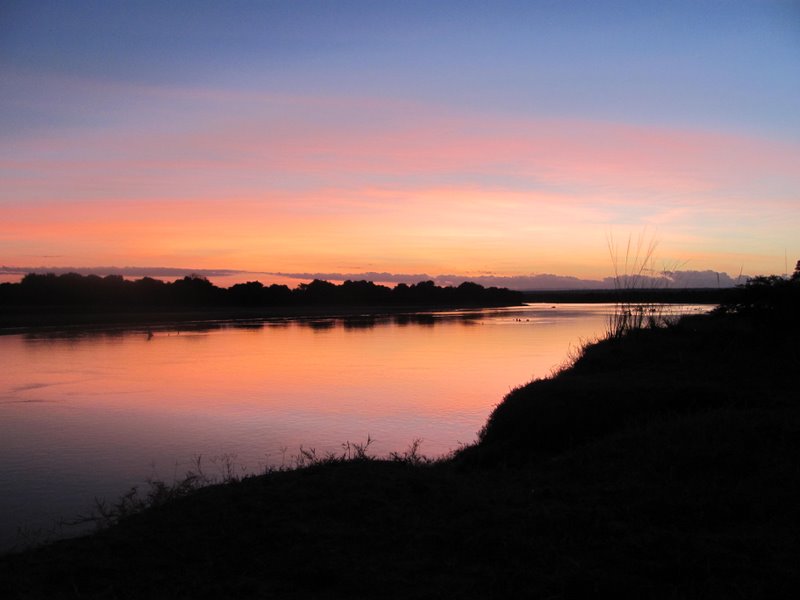
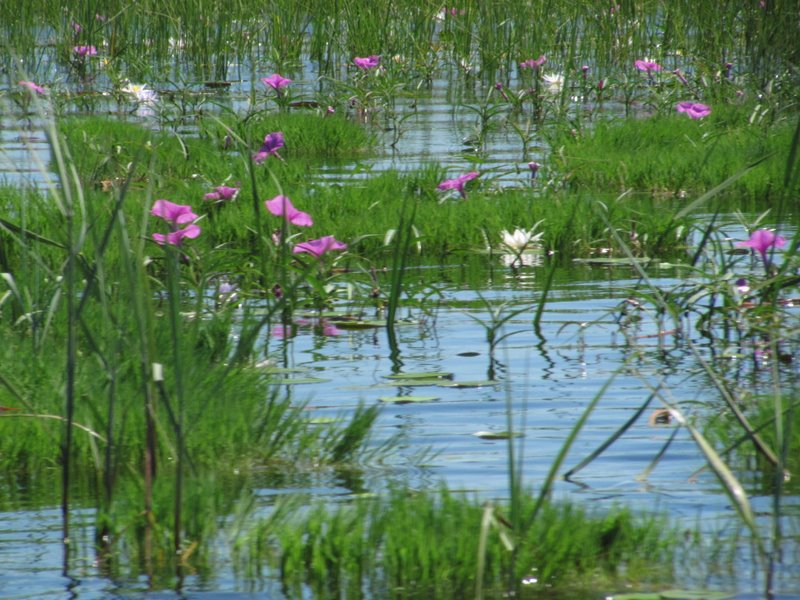
I had no idea of what was going to happen and when, so I just trusted my local guide. It took quite a while to organize everything in the morning, so it was around ten that we got to the harbor in Mongu. We decided to take a boat to Lealui, which is where the king leaves that morning. The views on the Zambezi floodplain were beautiful and the trip rewarding already for that reason.


As only appropriate in Zambia, we arrived too late to Lealui. The king had already left and we saw the boats only from a distance. It was interesting to see Lealui though. Looking at the floods, I wondered whether they had moved out from there already earlier. Is Kuomboka so late that the numerous visitors can enjoy sunshine instead of rains?

After a quick walk in Lealui, we returned to our boat, and it left back immediately. We got a bit closer to the king's boat but then the boat crew decided that we had forgotten someone in Lealui, and we went back there. They took maybe twenty more passengers to the boat and after that the journey was unbelievably slow with the under-powered motor that the boat had. We could just watch the speedboats passing us and doing the trip in perhaps one fourth of the time. Even the beautiful scenery started getting dull under the burning sun.


It takes several hours from the paddlers to get from Lealui to Limulunga, so we had our lunch and met some more people before heading to Limulunga. Limulunga was full of people. The boat ride to Lealui is rather expensive – at least in local standards – but Limulunga is just a minibus ride away from Mongu, so most of the people go only to Limulunga. It all resembled more of a big modern festival than a traditional ceremony. People were drinking beer and enjoying the atmosphere. Both of the big mobile phone operators, Zain and MTN, were sponsoring the event and you could see their ads everywhere. I also saw numerous different kinds of Kuomboka t-shirts, most of which were probably printed by entrepreneurial individuals – I think Lozis could work a better organized plan for selling Kuomboka souvenirs.
We went first to see the Lozi museum. This discussion took again place in Lozi but the answer for the inquiry about the ticket price was “2000 from you and 5000 from your friend”. Naturally, a discussion followed with arguments such as “How can you charge from someone's wife more just because she is white?”. I don't think they quite believed that one but in the end also my ticket was only 2000 kwachas. The museum itself was rather small but interesting enough.
After that, we went to wait for the king to arrive. The path from the harbor to the palace was lined with fences. We were a bit far from the harbor but directly at the fence. First, the paddlers came, they are traditionally clad in animal furs. After a long wait, the king finally came together with the Zambian president. (They were surrounded by policemen, so I didn't get a photo of them.)

We stayed also the next day in Mongu and went to Limulunga again. We were hoping to see the king because we had heard that he is in front of his palace to meet his people, but we had bad luck and he wasn't there. Instead, we went to have a closer look at the boats and saw some traditional dances. Naturally, we also met some more people. Kuomboka continues even after that but I had to get back to work, so we took a night bus to Lusaka. This time, the bus actually left according to it's timetable at 21. The bus had the most uncomfortable seats ever, but eventually the journey ended and we got back to Lusaka around 5 o'clock in the morning. Kuomboka was definitely worth all the trouble, and I would recommend going there to anyone.