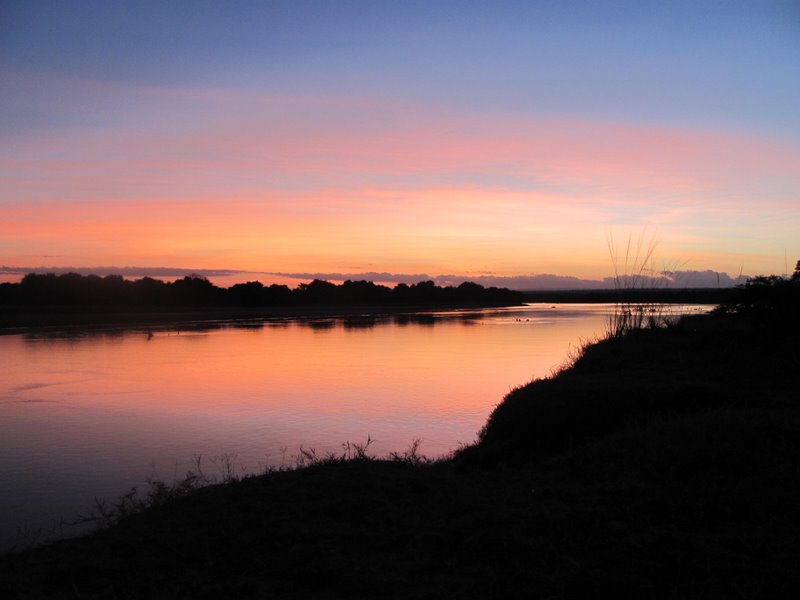
Tuesday, 29 June 2010

Who am I?

The most common stereotype of white people is that they live in Kabulonga, are rich and hang out with other people either there or at Manda Hill and Arcades. There are some other stereotypes and expectations that surface in different situations. So, who or what am I:

-Celebrity: Everybody knows me: I hear words like Kamwala South and Chawama often around me.

-Zoo animal: Some boys actually took photos of me in a minibus.

-Potential friend: A woman at Kuku market declared that she wants me to be her new best friend. Also asking my phone number is very popular. It doesn't even mean that they would call me but just having a white girl's number is something.

-Potential employer: I've been stopped a few times by women who have inquired whether I need a maid.

-Racist: I refused to shake hands with a man who seemed to me to be either drunken or crazy, so he concluded that I won't shake hands with him because he is black.

-Respected or scary?: I went to watch a performance of one of the cultural groups at KYP. When I was in the audience, there was a half a meter of space around me that no-one dared to break even though normally 'personal space' is an unknown concept.

-Donor: The performance was about malaria prevention. After the performance, a woman came to talk to us and asked how she is supposed to get a mosquito net. She was clearly expecting me to be giving them away. I've also been asked to start a college - and the person asking that was well-educated and smart.

-Backpacker: When I go to the intercity bus station, the men there always expect me to be going to Livingstone. When I get off a bus there, the taxi drivers suggest taking me to Chachacha Backpackers.

-Bank: I get asked for a loan way too often.

-Sight: I've lived here now for over four months. Still, all the children want to greet me when I pass by. While travelling, if the car stops in any rural area, it is very quickly surrounded by curious children staring at me.

-Status symbol: I was walking with a guy to Kanyama, and he wanted to stop by at all of his relatives and friends just to show me around.

-American: This is one of the funniest ones. Someone started a conversation with me by saying “America is a great country, isn't it?”. Some have assumed that I'm from Peace Corps.

-African: When I had my hair braided, I received an unimaginable amount of positive feedback. Not only friends and colleagues but also strangers in the streets and minibuses complimented me on my hair. Some also said that now I'm a real African.

Wednesday, 23 June 2010

Notes from minibuses

Sometimes the minibus journeys are plain frustrating but it's true that my life would be a lot more boring if I drove with my own car. I could have a blog where I'd explain only the funny things that have happened to me in a minibus but I want to share a few of them with you:

I was in a minibus going home after work, and our minibus had to stop because an MSF (Medecins sans Frontieres) car came behind us with emergency lights and sirens on. Two minibuses followed immediately after the MSF car. They had obviously seen their opportunity to pass all the other cars when they are giving way to the emergency vehicle.

…

One evening, I took a minibus from the Embassy supermarket to go home. There is no bus station there but usually there are people dropping off from the buses that come from town, so it's not difficult to catch a ride from there. I took the first minibus that I saw – or actually heard the familiar John Howard, Chawama shout. The minibus had only the conductor and the driver and no other passengers but they started driving anyway. Unfortunately they turned to the wrong direction. I got very worried, and it didn't help much when we turned to a small road where there were basically no people around. They explained me how they were just avoiding the police but as I hadn't seen the police car, it was hard to believe it. Eventually, after driving those small roads for a while, we started seeing more people and we got to a place that I recognized. They dropped me off at my usual stop and didn't even take any payment from me because they had delayed me.

…

I took a minibus to the Manda Hill mall. Because I don't go there often, I was unsure how much the ride should cost. That's why I asked from the girl sitting next to me whether she knew the price. It turned out that she was going there as well. She asked what I was planning to do there and I rambled about “nephew's” birthday and that I needed to buy him a present. Then I asked her plans and her answer was that she works there in a pizzeria. Duh. Served as a remainder that usually people going shopping in Manda Hill don't take a minibus.

…

During that same minibus journey, there was a man sitting on my other side. He told me that he had seen white people before but had never talked with one. He was very nice and polite but he had a question: he wanted to know whether white people have any culture. He told me how he can do wood carvings and then asked from me what I can do. This question took me first by surprise but I answered that I can knit, and that I learned it from my grandmother. Soon after that I came up with an even better example: I can do Finnish folk dances (I considered it safe enough to mention it as it's highly unlikely that I would ever be in a situation here where I would need to prove it – it's probably 15 years since the last time I've danced.) He was impressed after hearing this, so I succeeded in removing at least one misconception of the white people.

Monday, 14 June 2010

KYP city campus

The campus area is quite large, it is surrounded by walls, and there are quite a few trees in the yard, so it's nicely calm and peaceful in comparison with the hectic Los Angeles road.

The main building that was built rather recently with support from TEVETA:


The door on the left side leads to the tailoring workshop:


And from the tailoring workshop you can enter my office. Note the HIV/AIDS posters on the wall.


There are HIV/AIDS posters around the campus. This one is my favorite and right outside my door:


All the windows have bars:


There are also numerous animals in the campus:


In this building are the hotel & catering and auto mechanics classrooms. The auto mechanics workshop is behind the trees and the minibus:


In this building are the computer class and the accountant's office:


The computers are quite a mixed collection:

Tuesday, 8 June 2010

Food, part 2

A friend listed some ideas on what I should write about in my blog and one of them was food. This happened about three months ago, so in case you have any suggestions, it's a good idea to tell them immediately or otherwise I won't manage to write about them before leaving Lusaka.

Food here is basically synonymous with nsima, maize porridge, which is the staple food. Nsima doesn't have any taste at all, so it wasn't too hard to get used to eating it. We eat rice as well and occasionally also pasta. Rice is also cultivated in Zambia, especially in the Western province.

Typically we have some protein source and some vegetables with nsima. In my family, the protein source varies rather evenly between fish, sausages, beef, chicken, eggs and beans. The vegetables are often impwas, okra or some leafy greens such as pumpkin leaves, rape, sweet potato leaves or some others of which I don't know the names. My favorite food is eggplants with eggs.

The amount of meat is fairly small but we do eat it regularly. It might be beef heart though. However, there is a protein source that everybody in my family says they prefer over beef: caterpillars. They have a very high protein content, so in that way they are an important part of the traditional Zambian diet. I wasn't too enthusiastic about them but I closed my eyes and tasted a few. The taste isn't too bad but the mouthfeel doesn't allow you to forget what you're actually eating. They are not a big part of our diet though; during these three months we've had them twice and there was always something else besides them.

Fish is common in our household, either fresh or dried. I'm not a huge fan of fish since in my opinion nothing in this country happens that fast that you could have proper fresh fish in Lusaka. The dried fish is sold in the markets so I see daily the amount flies around the fish, which doesn't really increase my appetite. Then again, closer to water, the fish is often excellent. A specific type of fish is kapenta, which is a very tiny fish. It used to be one of the cheapest protein sources but apparently isn't anymore. Kapenta tastes like fish, so I prefer it over caterpillars (unlike the rest of the family) but I have the same prejudice against kapenta that I have for fish in general here.

Vegetables are almost always cooked. When I cooked for my family for the first time, I made some salad and the teenager of the family said that it was the first time ever she had salad.

Spices are not commonly used, in my home there were no spices besides salt, before I bought some. Salt is used a lot. I don't know is it the heat or what, but I've also developed a taste for salty food. Month ago I found myself adding salt to a toasted sandwich in a restaurant.

There are many customs related to eating. Before eating, we wash our hands. Classically this is done so, that there is a dish filled with water, and the man (the head of the house) washes his hands there first and then the rest in some sort of rank order. As the bacteria and diseases can actually spread that way, there has been campaigning against the custom, so instead we have a separate dish for fresh water, from which we can pour water on the hands.

Traditionally everything throughout the meal follows the rank order: men take food first, then women and the children last. Man is the one who brings the money to the house, so he gets also a lion's share of the food. There are also some other details that show the rank: For instance, I get a porcelain plate whereas the children eat from plastic plates. Traditionally also, the man would eat seated on a chair while everybody else sits on the floor. We have a dinner table but not all can fit around it at the same time, so some of the children usually have to sit on the floor. So did I for the first three months before we got the dinner table.

Nsima we eat with our fingers but rice or pasta we eat with forks or spoons (there are never enough forks for everyone). I had lunch with another mzungu in a restaurant, and we ate nsima with our fingers – not very exotic for either one of us after already spending a few months in Zambia. However, to the waiter this was apparently something special and afterwards he come to thank us for respecting their customs.

Admittedly, I don't eat nsima in a restaurant that often – once a day at home is quite enough for me. That time, the lunch restaurant had ran out of rice before we got there. Usually I go to Subway or to an Indian restaurant. Subway is cheap here, and it's nice to eat some fresh vegetables sometimes. Indian food isn't that cheap but there are quite a few Indians here so the Indian food is usually excellent. Then again, pizzas and hamburgers are hugely over-priced and not that good.

Friday, 4 June 2010

Food

I have no idea what these are called. However, they are usually cooked with pounded groundnuts:


Caterpillars at the market:


Cooked caterpillars:


Chicken foot with nsima. (There was something else for dinner as well. Chicken feet are a special delicacy.):


Kapenta at the market:


Cooked kapenta:


Dried maize:


Dried maize cooked with pounded groundnuts:

Tuesday, 1 June 2010

Not my Africa

I sometimes think that I give a too bleak picture of Zambia. To compensate that, here are some photos from a short trip to South Luangwa national park.


Thursday, 27 May 2010

A week in a volunteer's life

Thursday

I have an 8 o'clock communication skills class. I start around 8.30 but even then very few students are present. I talk about written communication and the students look like they couldn't care any less. I never got a good contact with this class. After that, I have a computer class. Again, not very many students are present. We review Microsoft Excel and talk about the coming exam, which I had almost forgotten.

The afternoon communication skills class is the opposite of the morning class. They participate actively and ask questions. The topic is communicating in the internet and netiquette. The students write everything down. After that follows another computer class, MS Word this time. Only half of the students are present, so I wouldn't want to proceed to a new topic but the students get bored, so I have to. Later, I realize that I shouldn't expect anymore that there are so many students present as was in the beginning of the semester. It's the same thing that happens always at the university as well, first lectures of the semester collect a lot bigger audience than the later ones. Of course, the effect isn't that extreme here, but the students have probably a variety of reasons why they can't attend. Some probably have to go to work.

After work, I run around the town looking for a present. The youngest of the family turns three. I had searched earlier for a perfect toy tea set, but can't find it anymore from the store. So I go to Shoprite and buy another kind of set from there. It's 17.30 when I get to Kulima tower bus station, so I decide to take a bus to Leveka, which is closer to home than Snow White. The bus to Leveka takes longer to fill up, so it takes a while before we leave. The traffic is completely jammed. There is a police traffic patrol at a nearby petrol station, so the minibuses can't use it as a shortcut and are thus unable to join the traffic. It takes probably half an hour to proceed 500 meters. After that, the rest of the journey goes fast.

It's already dark when I get off at Leveka. It's safer to walk from there than from Snow White, but I feel more uncomfortable because I walk so rarely from there. I walk together with a woman going in the same direction. At some point a young guy starts talking with us. The woman turns to her home and hands me over to him. We talk the usual small talk until we get to my place. He knows where I live, which I always find spooky. We exchange the usual pleasantries and I tell him that I won't recognize him later because I haven't even seen his face properly. I tell him to greet me when he sees me the next time.

At home, we celebrate the birthday. I give my present: the tea set, paper, crayons and soap bubble toy. She gets also a pair of shoes from her mother and keeps repeating “Is this all really for me?”.

At 19.30, we watch a telenovela called Second Chance, as we do every evening.

Friday

At work, I agree with a teacher that I have the last computer class with his students on Monday. They'll have first one exam and I can have them after that. I want to review MS Excel with them before they have an exam on that. My extremely small Friday class doesn't show up.

After work, I promise to go out for a drink with a friend. He has to meet someone in town, so I keep him company. The man follows the usual Zambian time concept, and 5 minutes turns out to be 25 minutes. It's again 17.30 before I'm at the Kulima tower bus station, but I take a minibus to Chawama. The traffic is almost equally bad as the night before. I am at home at 18.30 and it's already dark. On my way, I hear comments on how I'm late and someone warns that I shouldn't walk so late. I feel frustrated, as the days will only get shorter.

Saturday

I have tons of laundry, so I start my day by washing it all. While, I'm washing, the guy from Thursday comes to our gate. I am not very happy that he showed up there but I go to talk with him. He asks whether I have a boyfriend in Finland, and I say yes. He asks for his profession, and I answer that he's a teacher, because that's the only one that comes into my mind. Luckily, he doesn't ask more questions about my imaginary boyfriend. The discussions turns into religion and God. He says a lot of things and I stare blankly and say hmmm. Finally he leaves but promises to come back the next day. Hmmm.

I finish washing and have some breakfast while watching a live chicken in our kitchen. I decide to go to town to do some shopping. The weather is getting colder, so I've decided that I need jeans. I go to Kamwala, and buy the first pair that I try out. They cost K 60 000 (€ 10) and are made in China. I have Indian food for lunch at Downtown shopping center in Kamwala. It's still early, so I decide to visit the National museum, which is close by. I get the entrance ticket with the local price when I say that I have a work permit. Downstairs, there is an interesting modern art exhibition that was supposed to end already two weeks earlier according to the posters. When I walk upstairs, I try to figure out when was the last time I was in a building that has more than one floor. In the end, I come up with two internet cafes in Lusaka that are upstairs. After viewing the main exhibition that is upstairs, I change my opinion of the Lozi museum in Mongu: It's actually fairly big and extremely well-planned for a regional museum.

I go to buy some food from a supermarket and then some fruits from a market. When I'm selecting oranges and apples, a man comes and tries to sell me a plastic bag. I refuse but he won't give up until the woman selling the fruits shoos him away with an umbrella. After that, I see how a minibus hits a woman. Luckily, the woman isn't hurt. Considering how recklessly the minibuses drive, it's perhaps surprising that it is actually the first time that I see it happening.

I take a minibus back home. A man sitting behind me starts talking with me. He know some Finns, and he works for 4H in Zambia. He seems nice, and I tell him where I work. He promises to come and see me there, as I'd be interested in learning something about what 4H does here. Next to him, there is a man, who seems to me rather drunken, and who desperately wants to talk with me. Unfortunately, he uses Bemba, so he's not very successful. He gets off the minibus, and I have to get off to let him get out. He wants to shake my hand but my hands are full with my grocery bags. He starts slapping my face (not hard), and I yell stop. Everybody around me laughs and I don't appreciate it.

When I get home, only the youngest boy is there, and neither of us has the keys to the house. The women have gone to a baptism party. Eventually, the older boys come home and we get inside. The boys also cook dinner: We eat chicken. When the women get back, the mother hands me a beer. There was so much beer reserved for the party and so few people who drink that they had extras to take home.

Sunday

I wake up fairly early, and have breakfast. I go back to bed and read a book. Then one of the boys comes to tell me that the same guy is again at the gate. He wanted to greet me before going to church. I am getting a bit annoyed with him, even though he is nice and polite. He says he'll come again in the afternoon.

I agree to meet a fellow volunteer at Arcade's. We go to the cinema there and watch The Bounty Hunter. After that, we browse the Sunday market at Arcade's and buy some souvenirs. We also go to an internet cafe to plan the next weekend and have lunch at Subway. We finish by going to the supermarket and I buy a chocolate bar just out of the joy that I can, as the supermarkets, where I usually go, don't stock any chocolates.

When I get home, I ask whether the guy had showed up. He hadn't but he comes almost immediately after I've gotten home. This time he brings a friend with him. I tell him that I'm probably not at home on Monday evening.

Monday

One of the teachers asks me to supervise an exam. The exam starts only at 11, so I am not able to have a computer lesson with them afterwards. Oh well, maybe next day...

A drama group is having a meeting with a potential donor just outside my office. I hear part of the discussion and they refer to me a few times. I get the feeling that they are trying to score a few mzungu points because of me.

Both of the students of my Monday afternoon computer class are there, perhaps not very punctual, but always enthusiastic. We talk about going to US Information Centre to have internet lessons.

When I'm walking home through the Kuku market, a man grabs my arm and holds it so tightly that it hurts. I wrestle my arm free, and immediately another man comes to scold him.

Tuesday

The students have two exams, and I supervise the latter one. Thus, no time for review that day either. I catch some students passing notes to each other, and get extremely annoyed with them.

I have no classes on Tuesdays, so usually I use them for planning the lessons. I need to go to town to take care of some things and to visit an internet cafe. When I get to the internet cafe and manage to open all necessary web pages, their connection drops. The solution they offer is to come back some other time. I haven't managed to do any of the things I had planned, such as updating this blog. Oh well, maybe next day. I head back to work to do some paperwork and to plan an exam on MS Excel for the students. I leave work at 17:10 and make it home just before it's dark.

Wednesday

My morning is rather slow, and after I've left home, I notice that I forgot to take my credit card with me. I need cash, so I return home to fetch it and leave again. In town, I walk to an internet cafe. On my way there, a man starts talking to me. He comments on me being late for work and asks about my weekend. I give short and a bit impolite answers because I find it odd that a stranger talks to me like that. After he asks about school, I realize that I've talked with him earlier as well. I had met him while walking along Los Angeles road.

In the internet cafe, I see a friend and we go to a cafe next door to have coffee. It's one of the very few places in central Lusaka from where you can get good coffee. It's my favorite internet cafe because they have the most reliable internet connection that I've found and even a wireless connection, so I can enjoy a cappuccino in the cafe while surfing in the internet with my own laptop and imagine for a moment that I'm somewhere else than in Lusaka. I stay in the cafe long enough to update the blog and search for some information that had been on my mind. I forget half of the things I had planned to do because I'm trying to hurry up to get to work.

At work, I have only an afternoon computer class. I show them how to draw pictures and insert them to word document. They catch the idea quickly and practice with enthusiasm.

Was this a typical week? Some weeks are perhaps less eventful but I still don't know what is typical in Lusaka. It did have some exceptional points, such as not having any power cuts at work or at home.